Featured

A life in love with sport

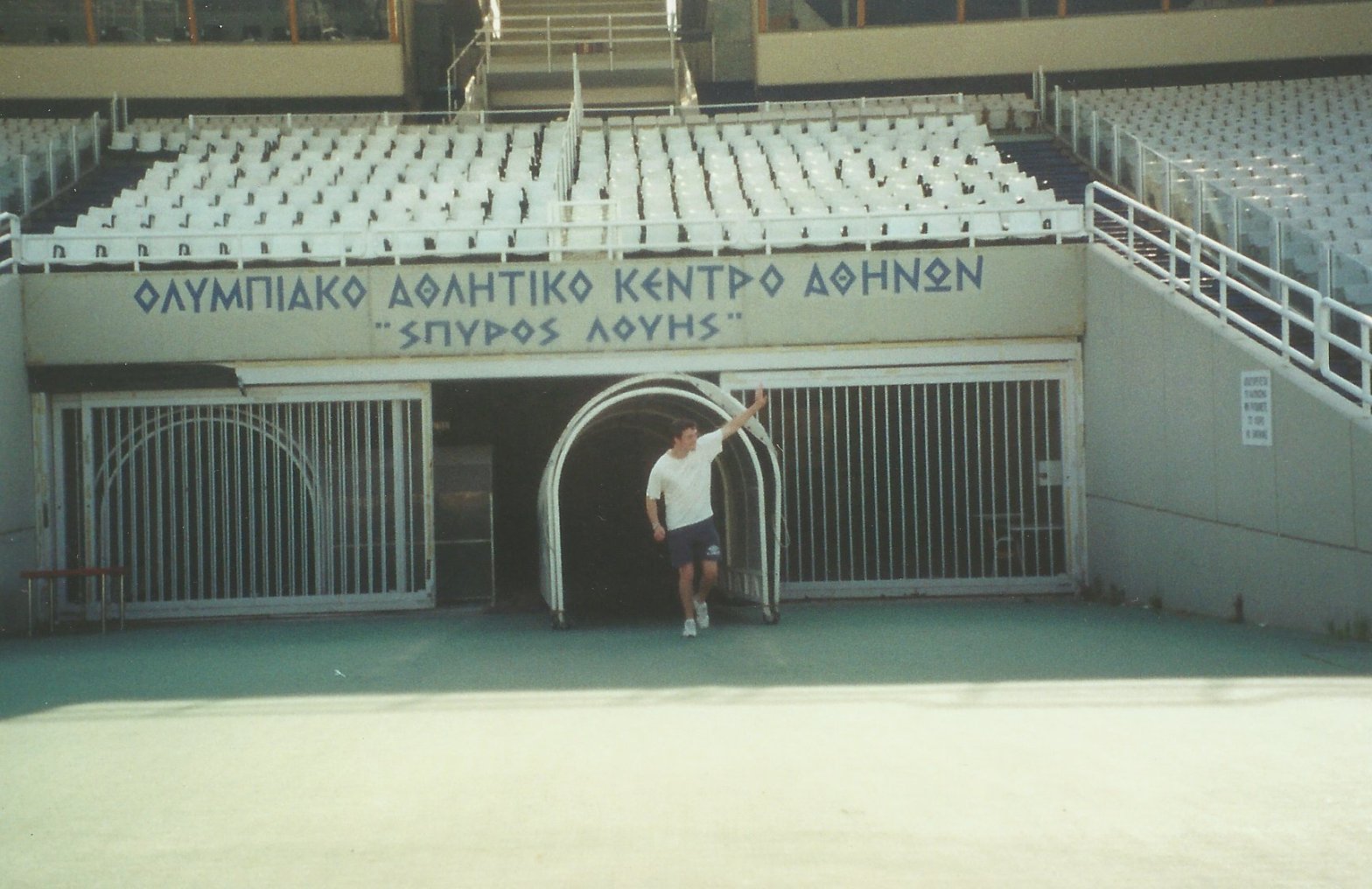
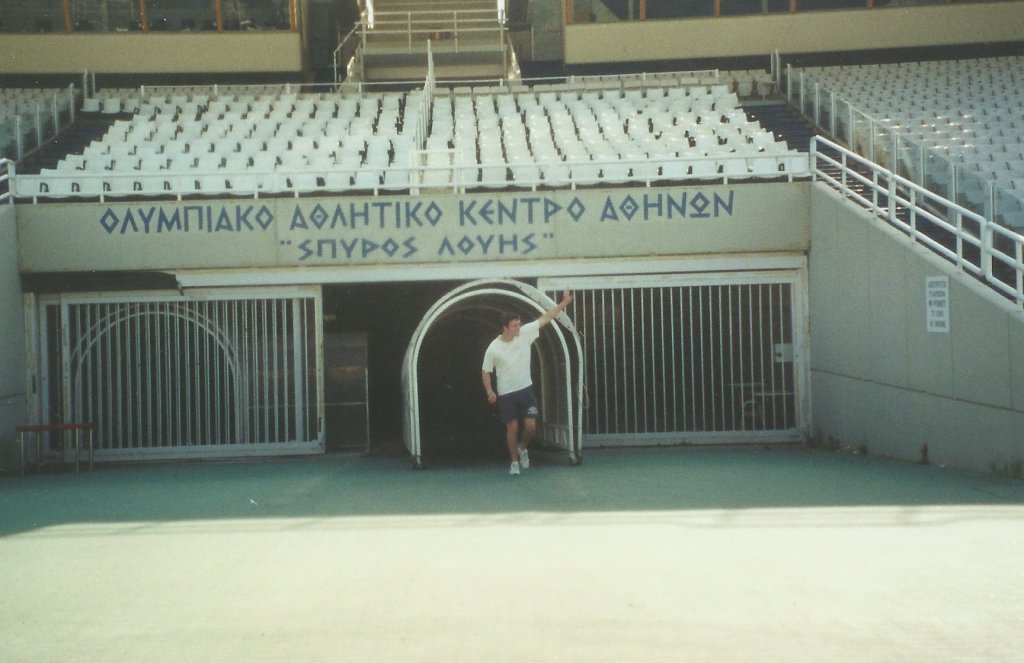
England away in Athens

2002 World Cup Qualifier

I have vague memories of people talking about Maradona’s hand of god in 86. I remember exactly where I was when Germany beat England on penalties in 1990, although I think I was too young to really be absorbed and affected by it. My earliest memory of being truly gripped by sport was the Barcelona Olympics in 92.

With England bombing out of Euro 92 short of winning a single game 1 month earlier, Team GB’s heroics in Barcelona were even more prevalent for me.

Roger Black, Sally Gunnell, Kris Akabusi, Steve Backley, Redgrave & Pinsent, even Chris Boardman. They all had me gripped that summer and it felt like it was us against the world. But most of all it was Linford Christie winning the biggest event of the games, the 100 meters, the fastest man in the world. I was so inspired by his win I even named my pet hamster after him.
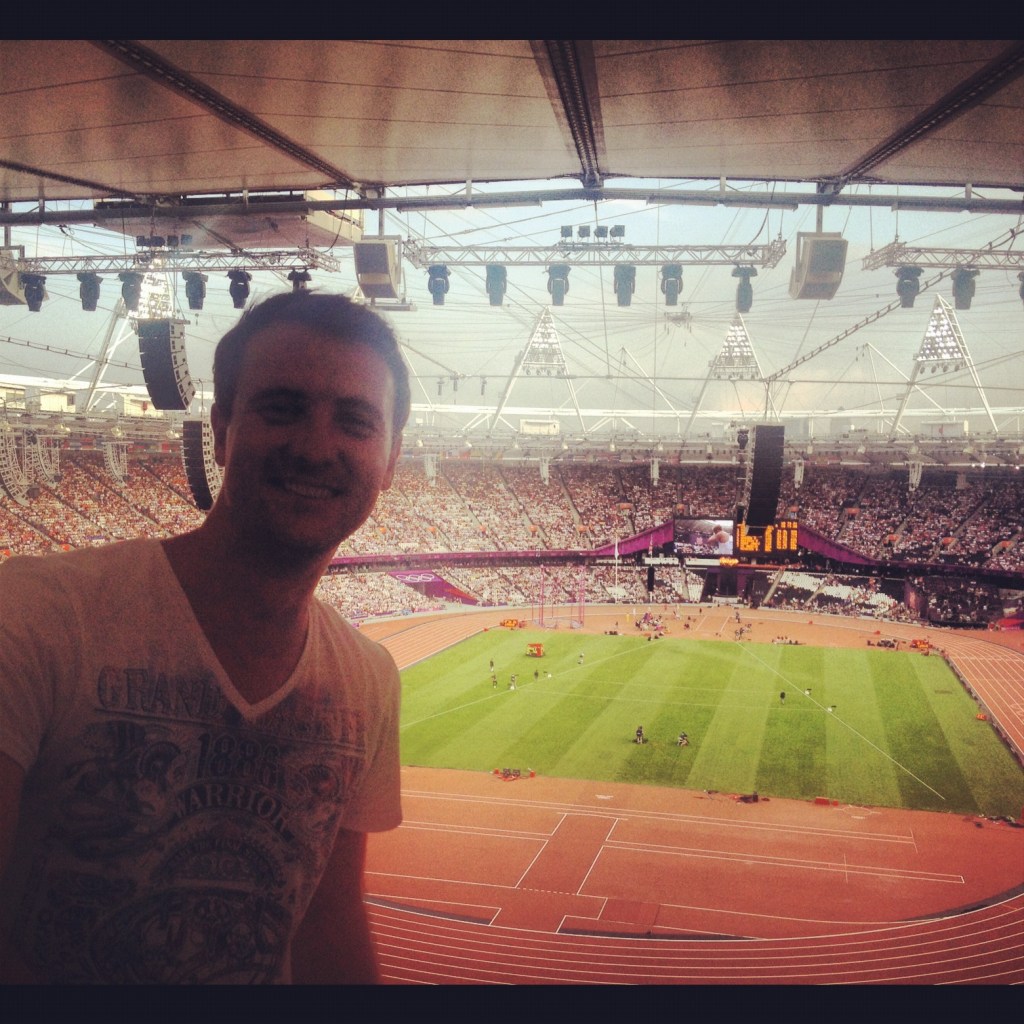
London 2012 Olympics

watching Bolt win the 200m

What really capture’s my imagination is a great sporting story and The Olympics has that in spate’s. With the athletes being mainly amateurs the stories were often relatable, inspiring and sometimes heart wrenching. Every four years when the Olympics come around I know I’ll be shedding a secret tear when a single Dad from Solihull appears from nowhere to pinch a badminton bronze.

After that sporting summer of 1992 I was hooked and throughout the nineties I watched EVERYTHING! Every football match, rugby game, darts, snooker, tennis, golf, cricket. Anything with a winner and a loser had me engrossed. I watched so much sport in the nineties that I once answered every single question correctly on an episode of Question of Sport!

This love for sport really paved a way to bond with my Dad and brother and I think this is very common for people who struggling to express themselves emotionally. All of a sudden we could direct our emotions into a shared interest. We could talk for hours debating tactics, who was the best player, should that have been a penalty?! 

We can see this across sport grounds the world over. For some it is the only time a father hugs his child. We see grown men cry who have never shed a tear. For those who cannot find the words now have a shared voice, a passion, a community.

Often my Dad would take my brother and I out to walk the dog on a Saturday afternoon. In between finding conkers and pine cones we would debate what the match results would be when we got in. My Dad would wager us a fiver on Charlton winning and United losing, knowing he would rarely win.
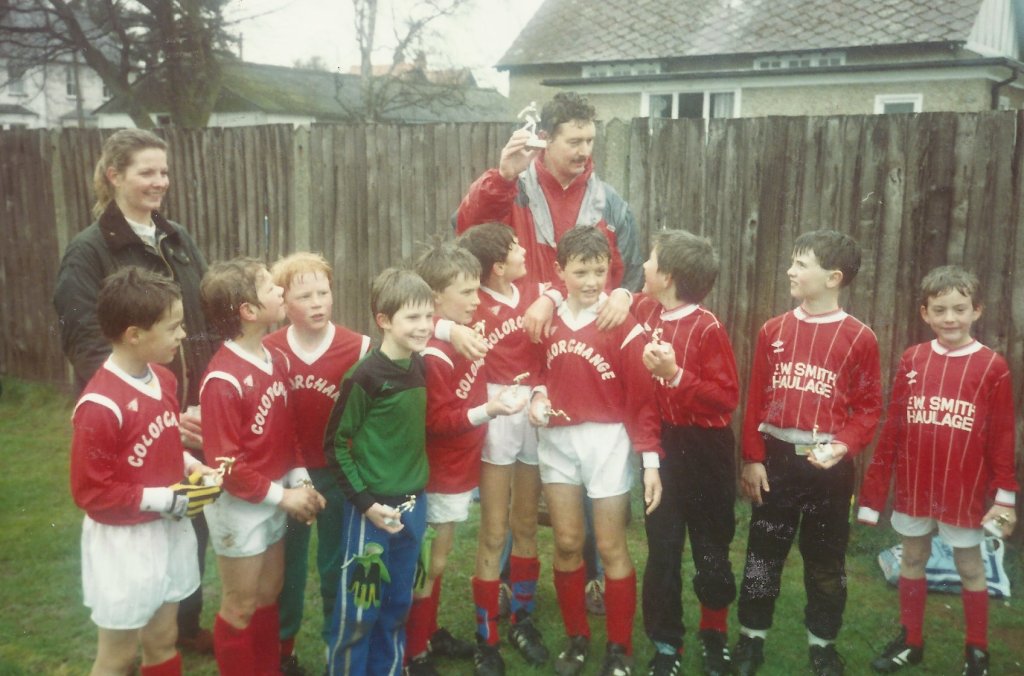
Playing youth football

with my Dad as manager

We would sit and watch the Grand Prix together on a Sunday. It was nice when Nigel Mansell or Damon Hill won, but the time sat with my Dad was the real draw. 

He had a friend with debentures at Twickenham, and would go to all the England games, making sure he always brought me back a programme which I would read front to back.

He took us to Wembley for the first time. Wycombe Wanderers v Kidderminster Harriers in the FA Trophy Final! Wycombe won 2-1 and we would be back 3 years later to face Preston in the play-off final. Wycombe won 4-2 but my main memory is a Preston fan spitting at us outside the ground. My Dad had something to say about that!

He was no stranger to football ground having been a regular at The Valley in his youth. Turning up to the ground on his moped in the sixties. But he was much more into rugby in his later life with much of our conversations about the goings on at The Exeter Chiefs.

My brother and I got quite into watching  (and playing) darts and snooker for a stage. They were always on quite late at night so I was desperate for a TV in my room to continue watching in bed. When I finally got one a would always fall asleep with sport on the telly. Snooker and golf being the best to drift off to.

Our relationship has always been a sporting one, either playing or watching. There was always great excitement and anticipation of watching Match of The Day when you don’t know the scores. Although one of the worst things I’ve ever done to my brother was to stick all the scores to the TV when he had been out as a teenager making sure no one told him the results. I hid upstairs listening to him shouting as he went to turn the TV on.

When we were at school Fantasy Football brought a whole new level of addiction for us. My brother hosted a full scale draft at ours one season, with a strongly fought bidding war by two Leeds fans over Tony Yeboah. His league is still going strong now and even has a second division!

Throughout my teenage years the sport I played the most of was rugby. Although I was a much bigger football fan than rugby fan I absolutely loved playing the game and still have a great affinity for it. I really enjoyed the physicality of the game and how rewarding it could be. It is probably the sport I see the most effect that teamwork has on performance. I was lucky enough to play in a couple of very good teams and when you get a good thing going you really do feel invincible out there. I made many good friends playing but when I started university it was actually the social side that turned me away from it.

My university days had more emphasis on football than actually getting a degree. If I wasn’t playing football I was playing FIFA/Pro Evo or ‘Champ Man’ (Championship Manager) or going to watch games across the North West.

We regularly went to Everton games at Goodison but in my time up north I went to Anfield, Old Trafford, Main Road, Turf Moor, The Reebok, The JJB, Ewood Park, Oakwell, Deepdale, Prenton Park, Elland Road, Villa Park and even ventured to see Cup Finals at The Millennium Stadium and Wembley. Football had taken over and apart from socialising there wasn’t much else I really cared about.

And then there was golf. I had only played once or twice when I was younger but in my early twenties I started playing a bit with some friends who were keen golfers. I had always watched a lot of golf so I knew the game well, but actually swinging a club was another thing. Regardless of the amount of tops, thins and air shots, all you need is that one clean strike, that pure hit, watching the ball flying through the air towards the flag and you are hooked. If you can hit it that good once, why couldn’t you do it every time?!
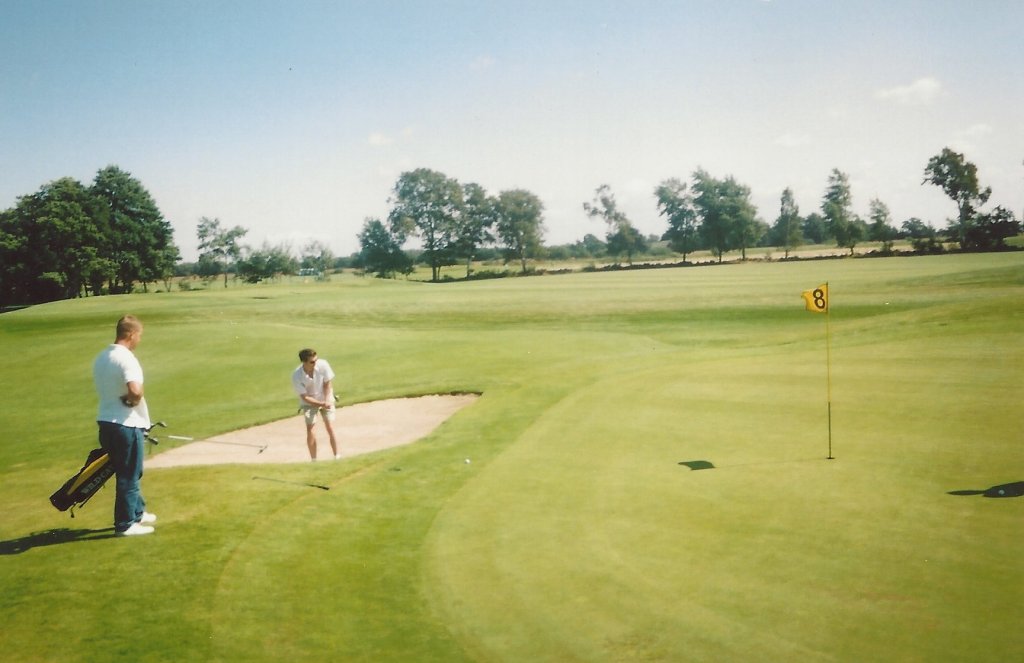
First ever golf trip – Sweden

I had no money and no qualifications after I dropped out of university and had no idea what I wanted to do with my life, but I knew I wanted to play more golf. So I did the sensible thing and got a job behind the bar in my local golf club. Free golf and a job, perfect. I ended up working pretty much every position in the club from bar manager to general manager and everything in between, completely falling in love with golf along the way. I spent a vastly disproportionate amount of time talking about, organising and working in golf than actually playing but that didn’t matter. I could spend an infinite amount of time talking about golf without even lifting a club.

I ended up working in a few other golf clubs but eventually left with the driving force to start my own thing. I didn’t have that golden idea but I knew I wanted to do something in sport. I started quite a few business that failed fairly rapidly but Stirling Experiences, my sports hospitality company, served me well for a few years. I reluctantly chose to close it in 2015 after my primary venue, Silverstone, changed their offering to re-sellers leaving me in an untenable situation.

I flirted with a golf events business more recently but have reached a point where I just need start doing. Doing something I am truly passionate about so I can find a happiness in what I do. It is for that reason that I am writing this.

I have decided to start creating sports content. Content about sports history, interesting stories, amazing stats and anything else that takes my fancy. I have dabbled a bit over the years but it’s time to get serious. Articles/blog, podcasts, videos, photos, I’ll be attempting to get my teeth into everything.

I don’t have a niche or an end game, I don’t know where it will lead me but I’m hoping it brings me happiness and gives others some value and enjoyment on the way.
Featured

The FIFA World Cup

A History of Controversy

As we are deep into the Qatar 2022 World Cup the football has taken centre stage, but there is still much protest and anger surrounding the tournament. A common feeling being that this World Cup is unlike those that proceeded it. I have taken a look back at the history of the World Cup and controversies that surround the event.

1928 – 2 years prior to the inaugural World Cup the FA withdrew from FIFA with problems over the definition on the amateur status and concerns about FIFA’s power and influence on national associations. This meant that British teams did not enter the first 3 tournaments.

1930 – Uruguay

Only 4 European countries entered due to the difficulties in travel. Uruguay did not enter the next world cup in protest to this.

1934 – Italy

Much like Hitler and the 1938 Olympics, Mussolini used the 1934 World Cup to promote fascism.

There we many rumours of corruption at the tournament and Mussolini’s influences benefitting Italy, who eventually won.

1938 – France

The was outrage in South America that consecutive World Cups were held in Europe

Uruguay & Argentina boycotted the tournament because of this.

Spain did not play because of The Spanish Civil War

Austria withdrew after they were annexed into Germany, star player Matthias Sindelar refused to play for the unified team.

Most controversially, Italy wore all black in their Quarter Final against France as a symbol of the Italian fascist paramilitary.

1950 – Brazil

Following World War II a whole host of teams were absent from this world cup for differing reasons.

Germany & Japan were unable to participate as they were still occupied following war.

Soviet Union, Czechoslovakia & Hungary refused to participate.

France refused to play after the Brazilian organisers would not move their games that were some 3,000km apart.

Argentina withdrew following a dispute with the Brazilian Football Confederation. Ecuador & Peru also withdrew.

India, having remarkably qualified, withdrew after FIFA denied them from playing barefoot. Austria, Turkey, Belgium, The Philippines, Indonesia & Burma also withdrew.

Scotland withdrew because they lost the home nations championship to England and believed only the winner should qualify for the World Cup.

Portugal & Ireland turned down invitations to replace withdrawn teams.

1962 – Chile

This tournament was marred by constant violence on the pitch. The Chile v Italy match dubbed ‘The Battle of Santiago’ with the Italian team needing police protection to leave the pitch.

Italian media had spoken badly of Chile saying that is was ‘pure madness’ to allow Chile to host.

1966 – England

African countries boycotted the tournament in protest after it was ruled there would be no direct qualification for an African team. They also protested against the readmission of South Africa to Fifa in 1963 despite its expulsion from the CAF due to Apartheid.

There were also links with the German team to doping at this World Cup.

1974 – West Germany

In 2008 a former FIFA president claimed that the 1966 & 1974 were fixed for the hosts to win with British & German referees seeing Brazil lose in both.

The Soviet Union were not at this World Cup after refusing to play the second leg of their play off against Chile. A new regime had gathered people deemed undesirable and executed them in the Santiago stadium, the venue for the play off. After FIFA could not agree an alternative venue the Soviet’s withdrew and FIFA saw the match go ahead with Chile kicking off against no opponents and scoring in an empty goal to qualify for the World Cup.

1978 – Argentina

A World Cup surrounded by controversy following the military coup in Argentina 2 years prior. In 1977 over 5,000 people disappeared and, with concentration camps less than a mile from River Plates stadium, the right wing dictatorship used the World Cup as a propaganda device much like Mussolini in 1934.

Johan Cruyff refused to participate after he and his family were kidnapped a few months before the tournament.

Argentina had many favourable decisions in the match and needed to beat Peru by 4 goals to proceed to the final. After endless accusations of match fixing Argentina won the game 6-0.

Argentina went on to win the final against The Netherlands in another controversial game. After being forced to take an extra long route to the stadium, they were then made to wait on the pitch for 10 minutes before the Argentinians appeared, whilst being subjected to abuse from 70,000 baying home fans. It was a brutal game with any 50/50 decision seemingly going Argentina’s way in a 3-1 win.

1982 – Spain

A tournament blighted by violent fouls, poor officiating and overcrowded stadiums.

Noteable violent fouling on Maradona by Italian Claudio Gentile and West German goalkeeper’s horrific foul on France’s Patrick Battiston.

FIFA changed referring regulations following this World Cup to prevent such fouling happen again.

There was consideration given for England, Northern Ireland and Scotland withdrawing because of the Falklands War and Spain’s strong diplomatic ties with Argentina.

West Germany’s final group game against Austria was dubbed the ‘Disgrace of Dijon’ with The German’s scoring after 10 minutes followed by 80 minutes of passing the ball back and forth as the 1-0 victory would see both teams qualify. Final group games were all played at the same time following this world cup.

1986 – Mexico

Some controversy here with Mexico being awarded the tournament. Opposing bids from United States and Canada were overlooked as they criticised FIFA president Joao Havelange and his ties to Mexican television network, Televisa, and the Mexican FIFA vice president. Havelange secretly promised broadcast rights to Televisa before the vote had even taken place.

1994 – USA

An Initially controversial decision over a non-football loving country, who didn’t even have a professional league, hosting a World Cup was quickly pushed to one side. With high average attendances, broadcasting and sponsorship deals saw this become the most financially successful World Cup of all time.

1998 – France

Former FIFA executive committee member, Chick Blazer, confirmed that he and other members of FIFA’s executive committee were bribed during the 1998 & 2010 World Cups host selection process. This 98 bribe turned out to be from a failed Moroccon bid!

2002 – Korea/Japan

This World Cup in its inception was a controversial one. The first ever joint hosts after both countries were forced together after separate bids were deemed unfeasible alone. Along with Japan having never qualified for a previous World Cup and the time difference an issue for many, FIFA was accused of putting political expenditure over the best interest of the fans. Football culture in South Korea at the time was viewed in a similar was as Qatar is now.

During Korea’s knock out wins against Italy and Spain there was a number of very dubious referring decisions leading to many claims of dirty play and cries that the tournament had descended into farce. Both referees for the 2 games were forced to retire shortly after the tournament due to match fixing and being bribed to help South Korea advance.

2006 – Germany

Germany beat South Africa to host and following numerous findings of undue payments and contracts an investigation was opened into Beckenbauer and Germany’s bid in 2016.

It was claimed that ‘foreign-looking’ people should not visit some areas in the former East Germany due to reports of new-nazi’s planned violence. The African Council in Berlin advised black and Asian fans to avoid certain areas.

2010 – South Africa

The 2015 FIFA corruption case reported that South Africa had secured the right to host the world cup by paying $10m in bribes to then FIFA vice-president Jack Warner and other FIFA members. Chuck Blazer also confirmed these bribes in his co-operation with the FBI. It was reported that Morocco had actually won the vote but South Africa was given the tournament instead.

During 2006 and 2007 the were major concerns about South Africa’s preparations and it was rumoured that it could be moved to another country.

In 2009 70,000 construction workers who were working on new stadium went on strike with unions alleging that they were grossly underpaid.

2014 – Brazil

Prior to the World Cup there was much unrest and protests regarding public spending for the tournament. Romario labelled the tournament ‘the biggest theft in history’ believing its real costs would exceed US$45 billion.

There were various issues with safety, including the death of 8 workers, a fire, stadium breaches, a monorail collapse and the collapse of an overpass leaving 2 people dead and 22 injured.

Thousands of homes in Rio’s slums were cleared for redevelopments despite protests and resistance. A Favela, which housed 700 families, near the Maracana was completely destroyed.

2018 – Russia

The selection of Russia as a host was very controversial. Issues included racism in Russian football, human rights abuses by the russian government and discrimination against LGBT people in Russian society. Not to mention the ongoing conflict in Ukraine, particularly following the annexation of Crimea.

The was many allegations, especially from the English FA, of corruption and bribery in the bidding process. Although officially unproven to this date.

In response to the Skirpal poisoning in March 2018 no British ministers or members of the Royal family would attend the world cup. Boris Johnson compared the event to the 1936 Olympics held in Nazi Germany

At the end of the 2018 World Cup, Russia was widely praised for a successful tournament. Perhaps there is more trepidation at the 2022 World Cup in Qatar due to what we have learnt from these past tournaments. And, especially in the most recent case, what may follow.

Pep Guardiola nearly ruined football for all of us

I must warn you that you may disagree with much of my opinions in this piece and that is absolutely fine. They are all my own opinions which are there to be questioned and debated.

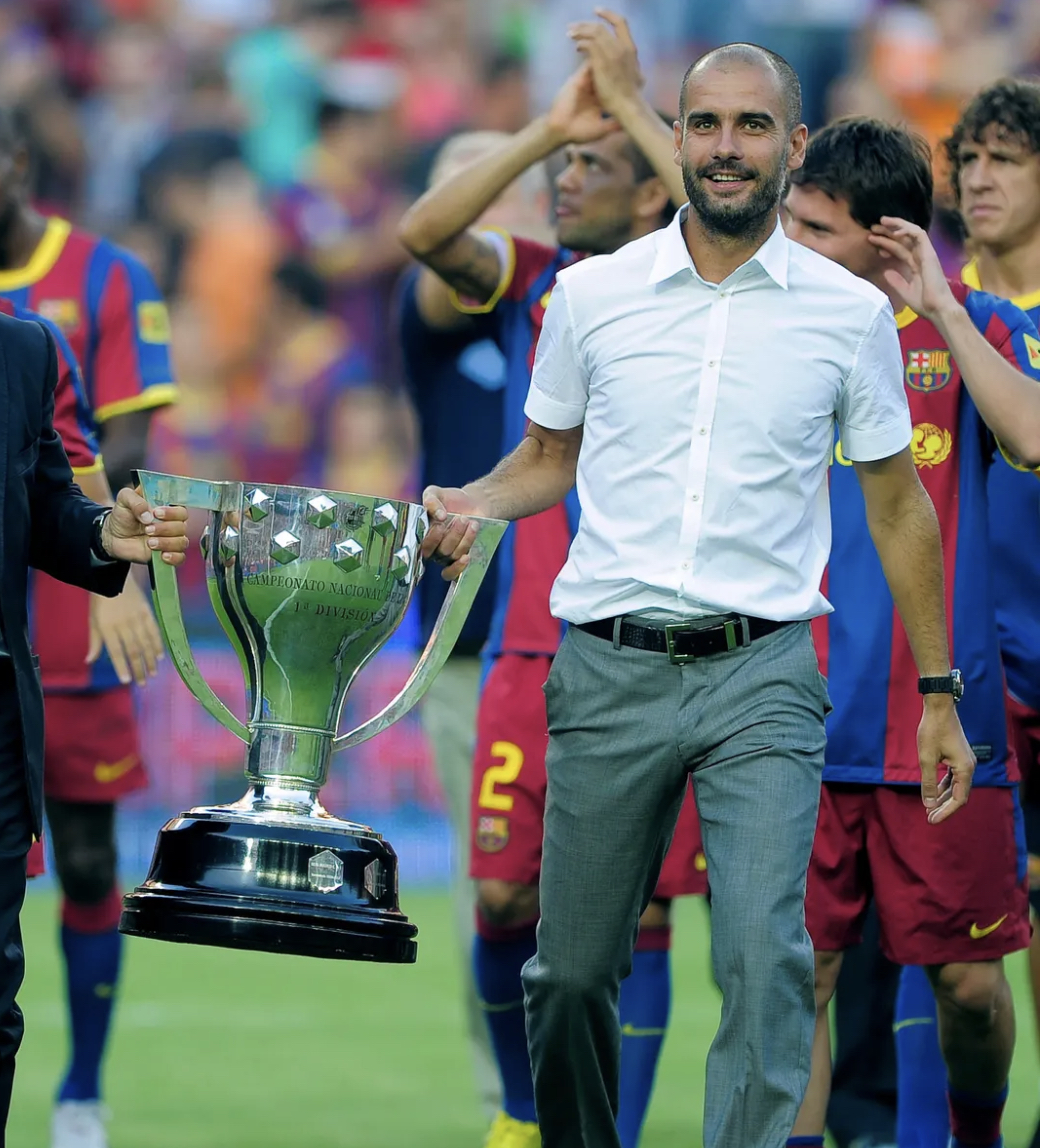
At the end of the 2007/08 season Josep ‘Pep’ Guardiola was promoted as B team manager and took over as Barcelona manager from the legendary Frank Rijkaard. In his first season Guardiola had one of the finest season’s in Barcelona’s history, winning the treble of Copa del Rey, La Liga and Champions League. The following season he won another La Liga and cup double and upon ending his 4 years at Barca he had acquired a club record 14 honours.

Pep’s time at Barcelona saw him introduce a style of football based on discipline and efficiency. Often seen as ‘tiki-taka’ football, a style he by no means invented. It was really taken from Johan Cryuff’s 1990’s Barcelona teams but seen previously by FC Schalke in the 1930’s and similar to the ’Total Football’ used by Ajax and The Netherlands in the 1970’s.

Guardiola’s system was characterised by short passes, high ball possession and constant movement of the ball. His team was so efficient with the style that other teams just couldn’t match them. Add to this the fact he had one of, if not the, greatest player of all time in Lionel Messi playing alongside more legendary players such as Xavi, Iniesta, Carlos Puyol and Dani Alves. This Barca team was unstoppable and it was up to everyone else to find a way to keep up.

The Pep Barca era happened to coincide with Spanish dominance on an international level. The Spanish team was actually more synonymous with Tiki-Taka and the phrase was said to be coined by Spanish broadcaster, Andres Montes, during the 2006 World Cup. Spain were so effective with the style that they won Euro 2008, World Cup 2010 and Euro 2012 and they didn’t even have Messi!

As you can see, during the 4 years of Guardiola’s Barcelona reign this style, whether you call it tiki-taka or not was dominating football and teams started to either try and emulate it or play a form of ‘anti-football’ in order to beat it.

The largest problem with trying to copy the style was that other teams firstly, did not have the training or discipline to install it and secondly, didn’t have a players talented enough the carry it out effectively. Teams would just pass the ball around endlessly with no end result. 

When we talk about anti-football, the first name that comes to mind is Jose Mourinho. After a number of fiesty encounters with Barcelona as Chelsea manger, Mourinho’s Inter Milan side stopped Barca from winning back to back Champions League titles by knocking them out in the 2010 Semi Final. The high pressure tactics and extreme gamesmanship used by Inter frustrated the Catalans with constant fouls and breaking up play. It was an enthralling tactical watch, but with more cards than shots on goal you wouldn’t want every game to be like this.

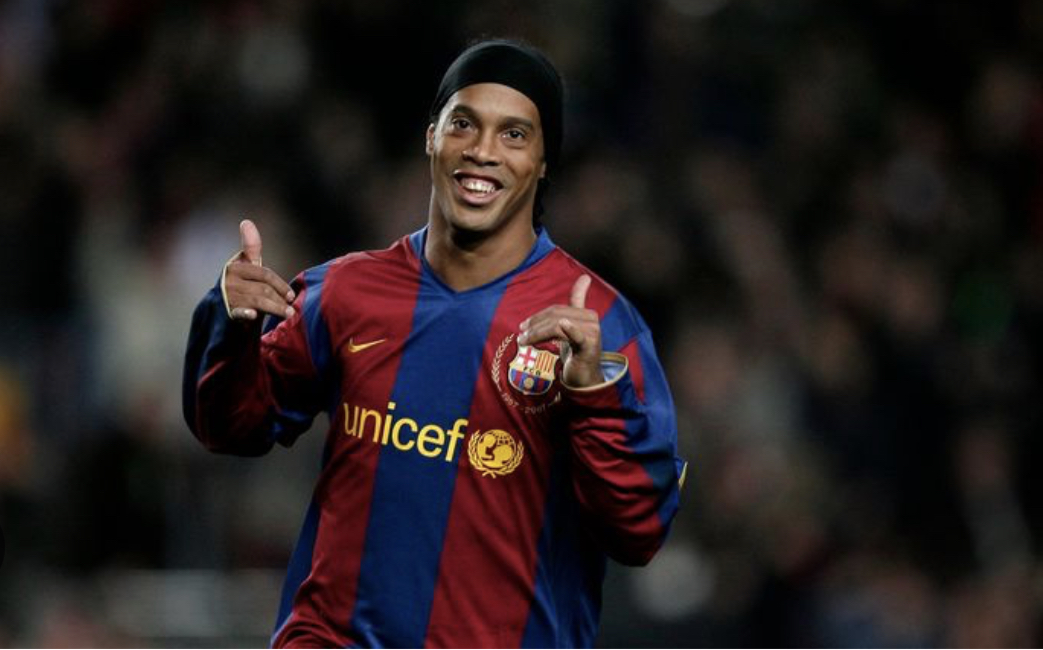
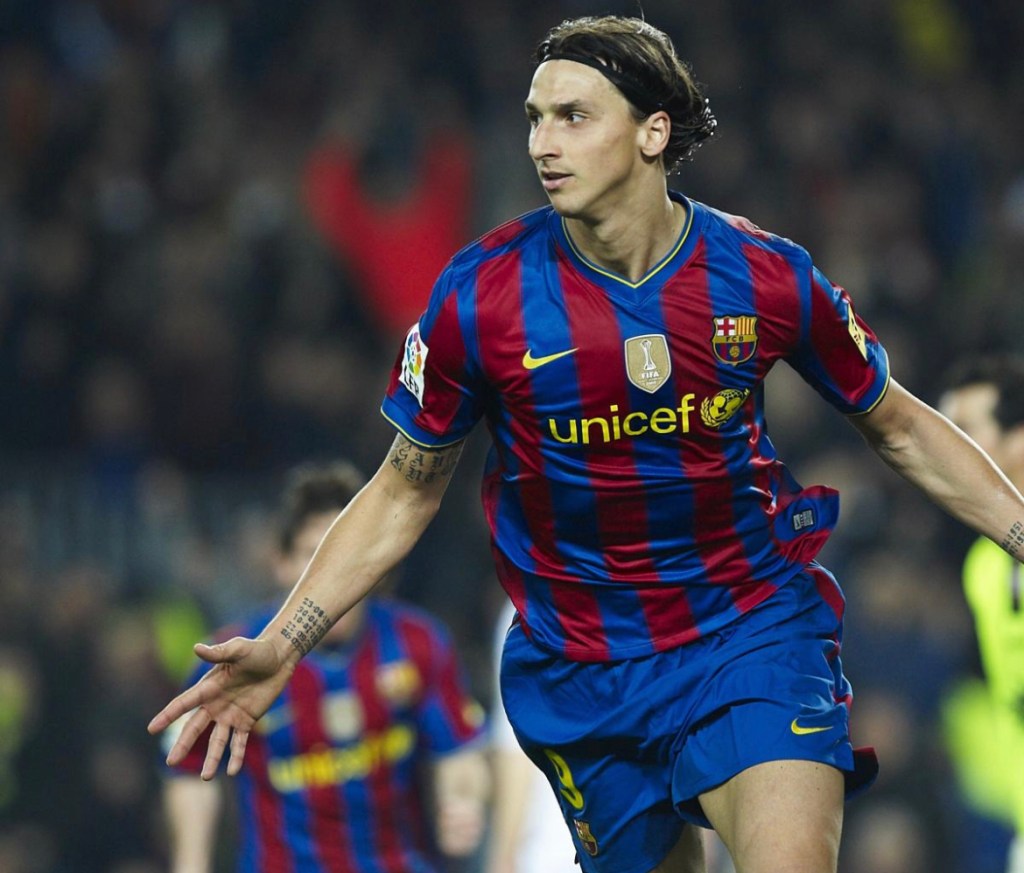
The strategy employed within Guardiola’s team would only suit certain types of players and saw some star names fall out of favour with Pep. Most notably one of the greatest world talents and possibly the most naturally gifted player of all time, Ronaldinho, was Guardiola’s first casualty. His free movement and unpredictable play does not fit in with discipline, positioning and short passing so he was quickly shipped off to AC Milan. Other star names that didn’t seem to fit in including Samuel Eto’o, Zlatan Ibrahimovic, Deco and Yaya Toure. Although the style was obviously working, do we really want to see a game that such exciting talented players don’t have a place in. 

The Spain team at Euro 2012 drew much criticism for adopting a formation with no striker. Although Spain won the tournament they were often seen as dull with Mourinho calling out their ‘sterile’ techniques, Arsene Wenger calling them negative and Gary Lineker asking if this was the death of the striker.

By the time Guardiola was coming to the end of his Barcelona reign, his and Spain’s brand of football had become wide spread with attempts to imitate it seen regularly. I for one was turning off from football in general as games became more and more predictable. As teams with less talented players tried short passing and high possession we would be watching the ball go round and round the pitch with very little to talk about. In a 2022 interview with Movistar Messi talked about worse managers attempt to copy Guardiola with very little success. He claimed that ‘Guardiola did football a lot of harm’ he said ‘It seemed so easy and so simple that everyone wanted to copy it afterwards.’

It had become very much like watching a computer game. I could tell you exactly where each player was going to pass it next and where the other players on the pitch would move to. Nothing was getting me out of my seat anymore and dreams of nineties nostalgia, personality and flair had taken over from the excitement of current competition. 

In an age where heavily media trained players where already lacking the personality of yesteryear we needed expression on the pitch more than ever. Barca’s legendary players of Messi, Xavi and Iniesta are undoubtedly some of the best to ever play the game but their robotic personalities off the pitch matched what we saw on it. Yes, if we watched them we would see some of the greatest football ever played but there was no drama, no storyline, no unpredictability and I was surprised how little I wanted to watch them.

At the end of the 2011/12 season Guardiola stepped down from Barcelona citing tiredness as the main reason. They had been knocked out of the champions league by Chelsea and lost La Liga to Madrid but he would finish with his 14th trophy in the Copa del Rey. The following 2 seasons would see Barcelona continue with the tiki-taka style with a La Liga win in 2012/13 and no silverware in 2013/14 but when Luis Enrique took over the following season he would have to change the style completely after Xavi’s departure to bring back success to the club.

In 2013 Gerrard Pique admitted that he felt Barcelona had become predictable in the way they played as a result of being overly dependent on tiki-taka. 

While Guardiola’s style of play has undoubtedly been successful and has had a profound impact on the sport of football, it had also led to a monotony in the way teams play and a decrease in excitement on the pitch. It is fair to say that Tiki Taka is a powerful tool, but it should be one of many in a coach’s arsenal. It is also important to note that Guardiola’s approach to Tiki-Taka has evolved over time, he has used different variations of it and has also been willing to adapt it to his teams.

Perhaps we were lucky that Pep decided to leave Barcelona when he did as this seemed to put an end to the poor imitations of his style and football was able to become exciting and unpredictable again. My football wilderness had ended and I was back watching again on the edge of my seat with recent Champions Leagues being some of the most exciting football we’ve ever witnessed.

Design a site like this with WordPress.com
Get started